The best santoku knives pair a blade length and handle feel that suit your prep habits with details such as dimples, steel type or a protective guard. These six options range from compact, guarded designs to full-size knives with specific edge and handle features, so match the differences to the foods you prepare most.
Quick Top Products
imarku 7-Inch 10Cr15CoMoV Santoku
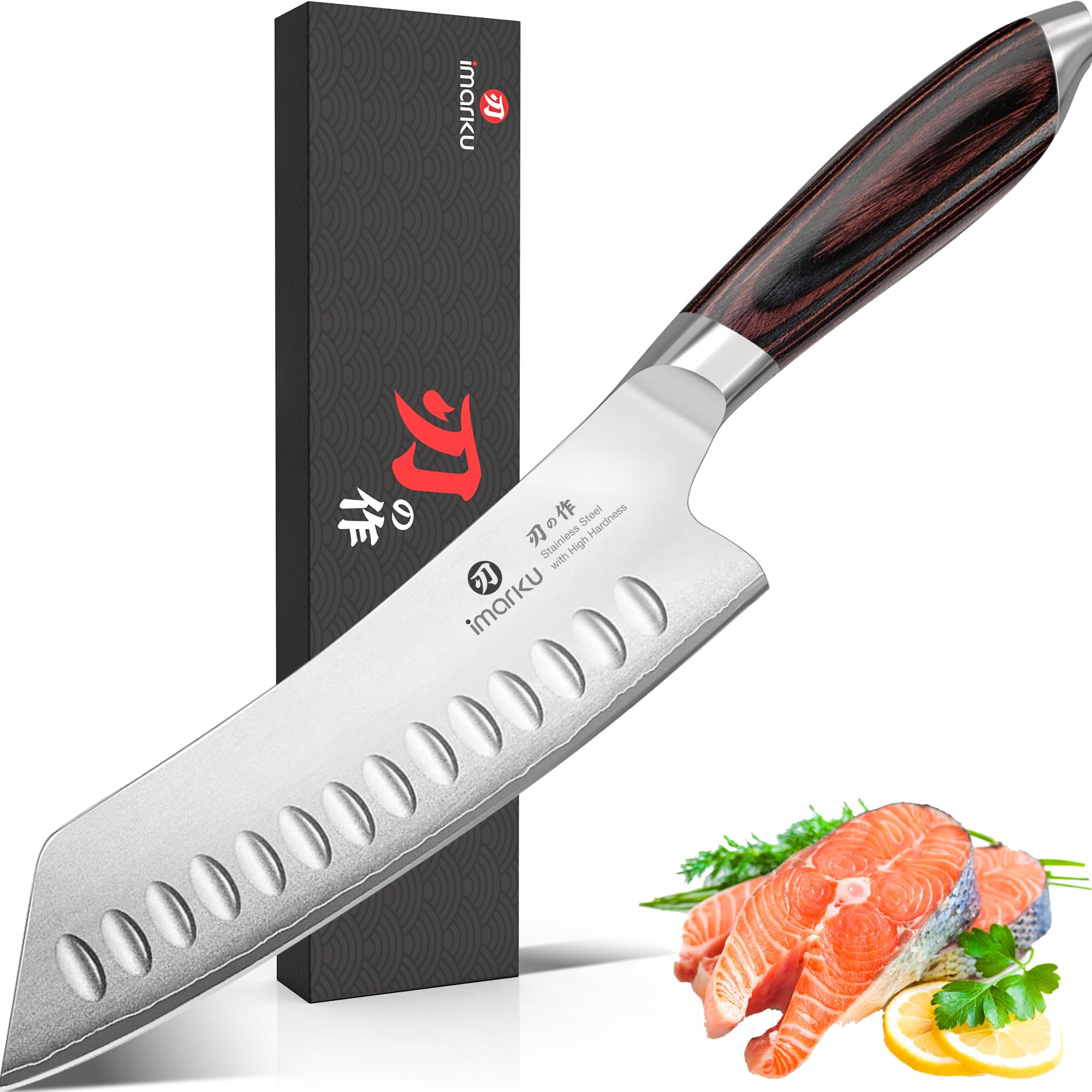
- The 7-inch blade has a 10Cr15CoMoV stainless steel core with protective cladding.
- Hollow-edge dimples are designed to reduce sticking on moist or starchy foods.
- The raised Pakkawood handle leaves more knuckle clearance at the board.
Best For: Home cooks who want a 7-inch knife with dimples intended to help moist ingredients release.

KEEMAKE 7-Inch Santoku Knife
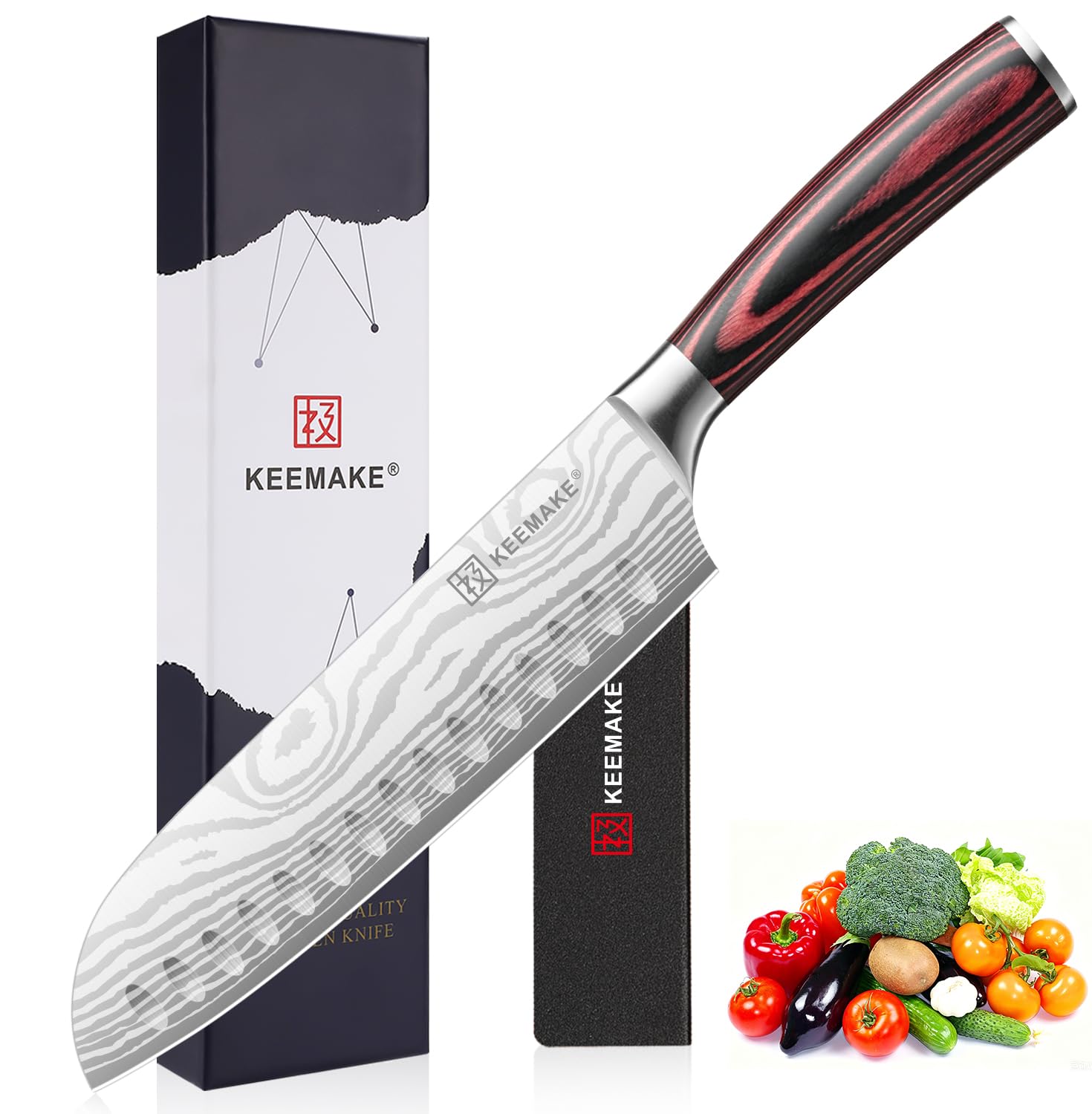
- The forged 7-inch blade uses 1.4116 high-carbon stainless steel.
- The knife weighs 8.16 oz.
- Its wave-patterned blade is designed to help slices release more readily.
Best For: Cooks seeking a 7-inch santoku with a stated weight and a blade pattern intended to reduce food sticking.
Zyliss Comfort 5.9-Inch Santoku
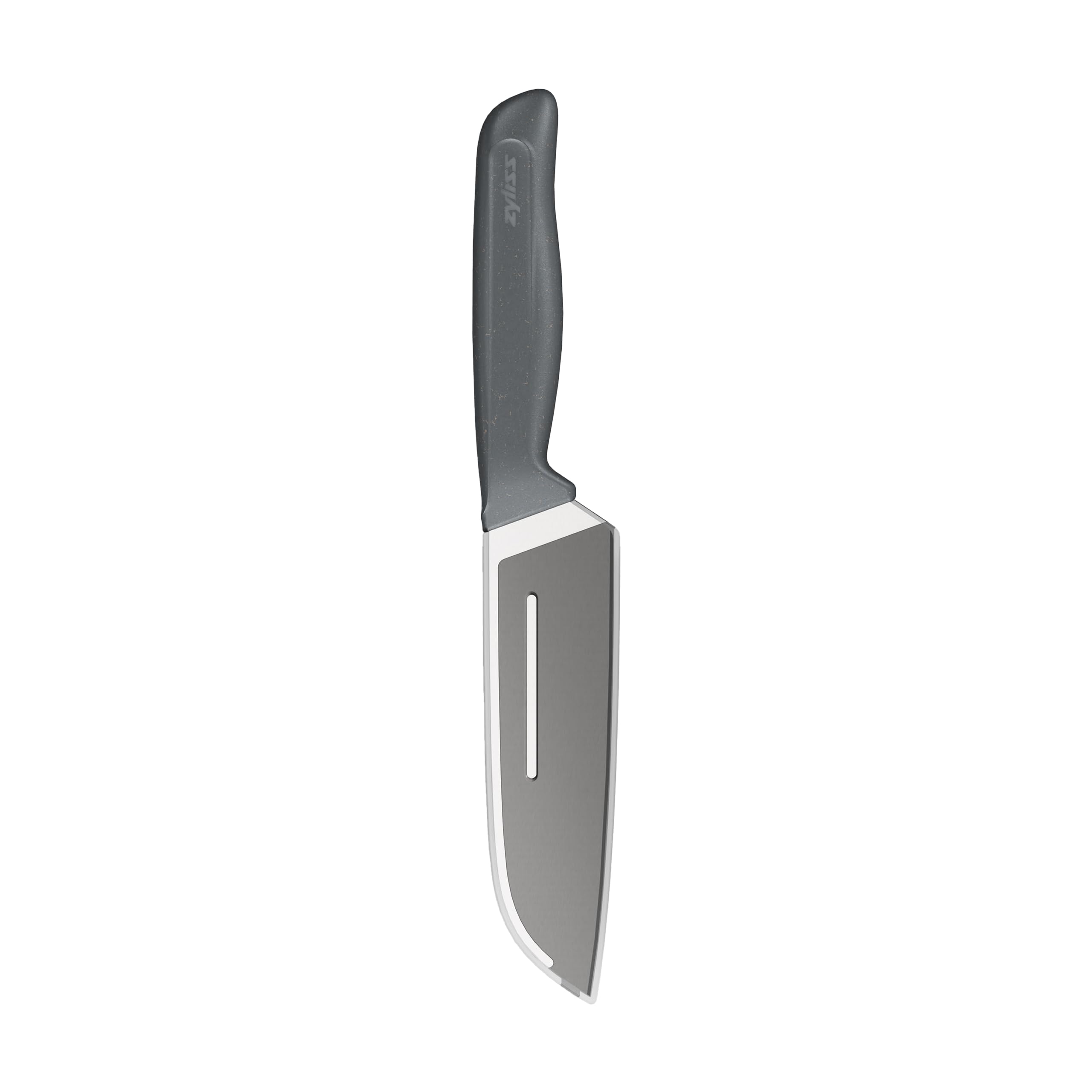
- The santoku blade measures 5.9 inches.
- It includes a protective knife sheath for storage or camping.
- The contoured non-slip handle has finger indents.
Best For: Cooks who prefer a shorter santoku and want a blade guard for drawer storage or camping.
imarku 7-Inch Powder Steel Santoku
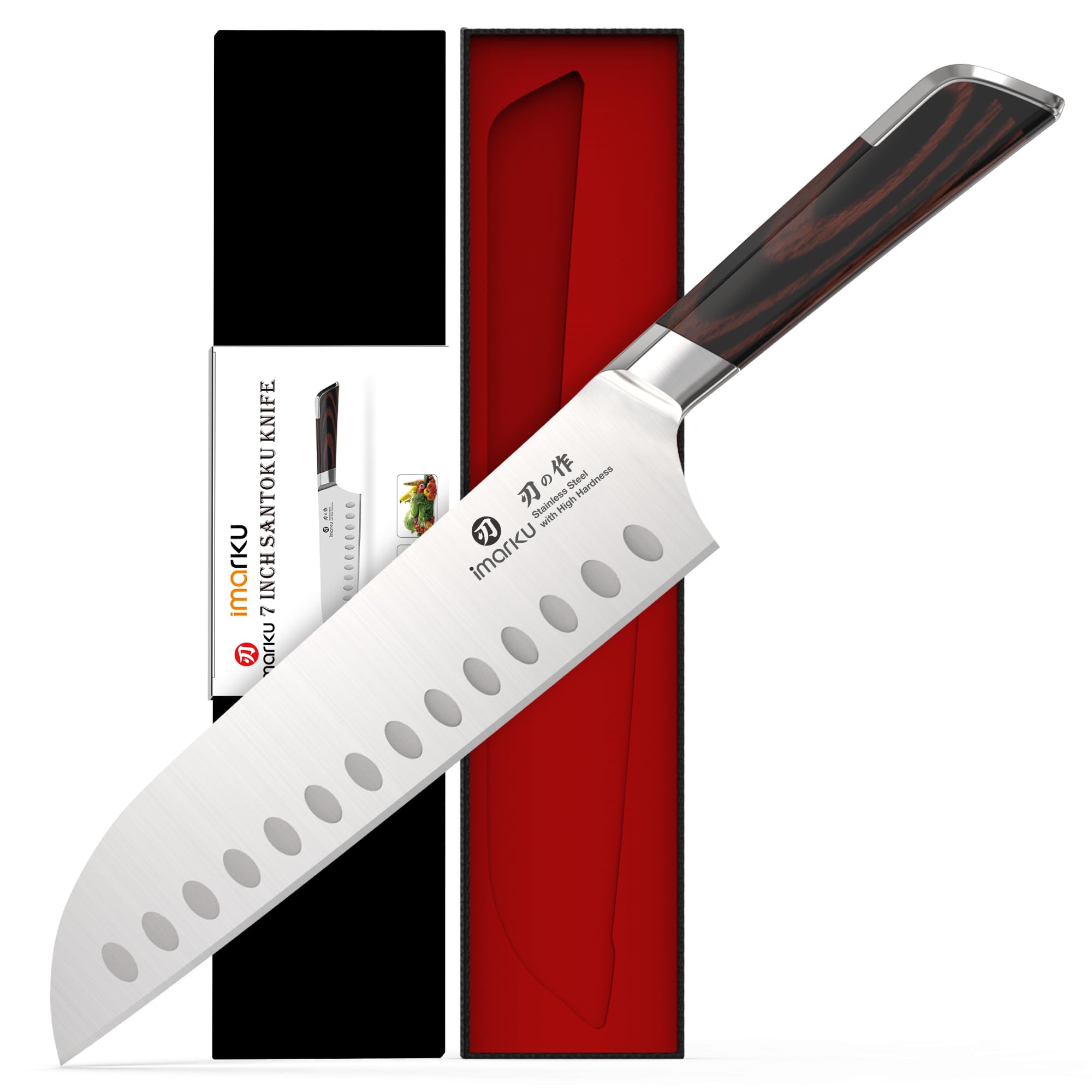
- The 7-inch blade is forged from powder steel.
- The PakkaWood handle has a diamond-profile contour.
- It arrives in a gift box.
Best For: A gift buyer or experienced home cook interested in a forged powder-steel santoku with a PakkaWood handle.
imarku 7-Inch High-Carbon Santoku
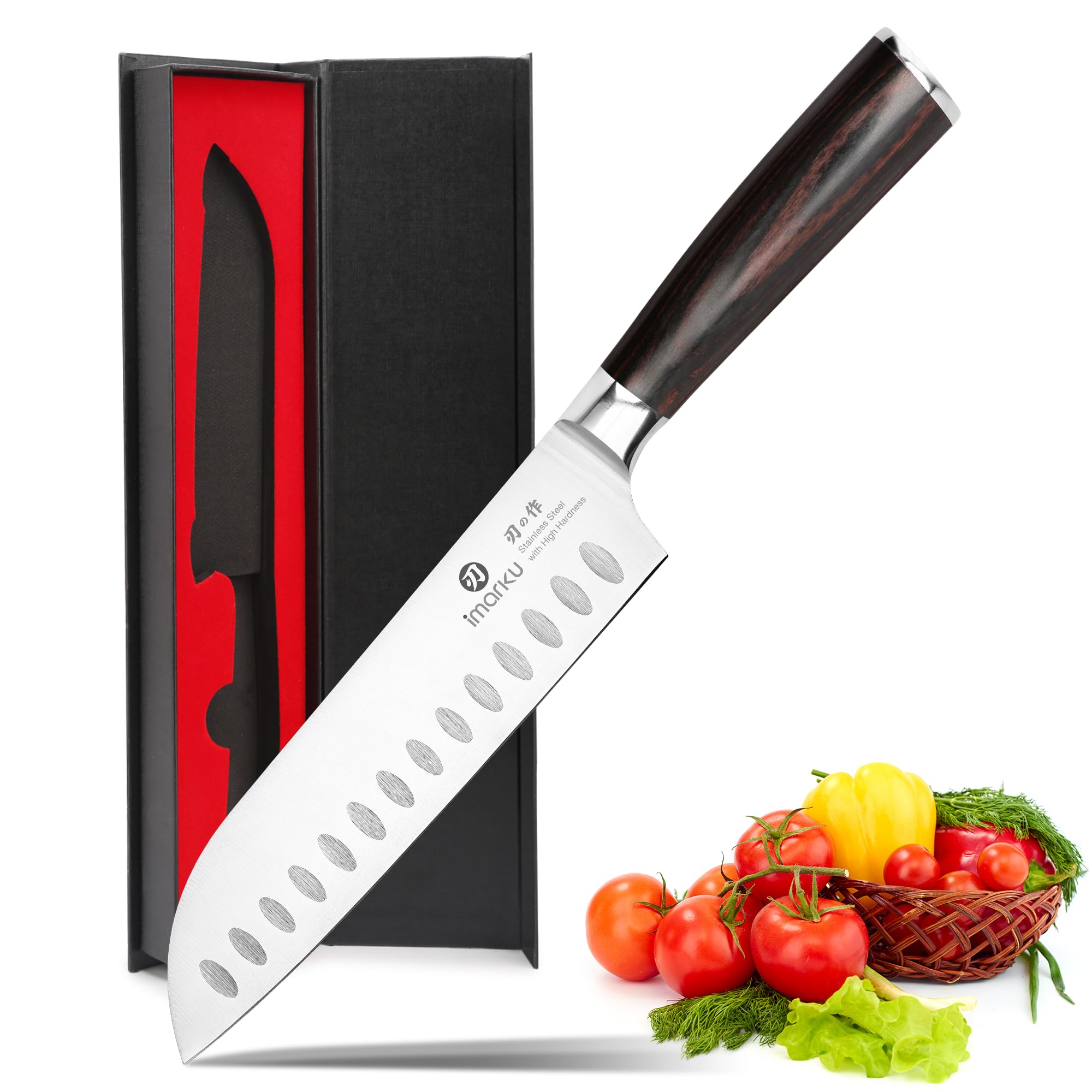
- The blade is 7 inches long and 2.5mm thick.
- Its hollow edge is designed to help reduce sticking.
- The hand-polished edge is 15–18 degrees per side.
Best For: Everyday cooks who want a 7-inch hollow-edge knife with a high-carbon stainless steel blade and Pakkawood handle.
imarku 7-Inch Santoku, Orange
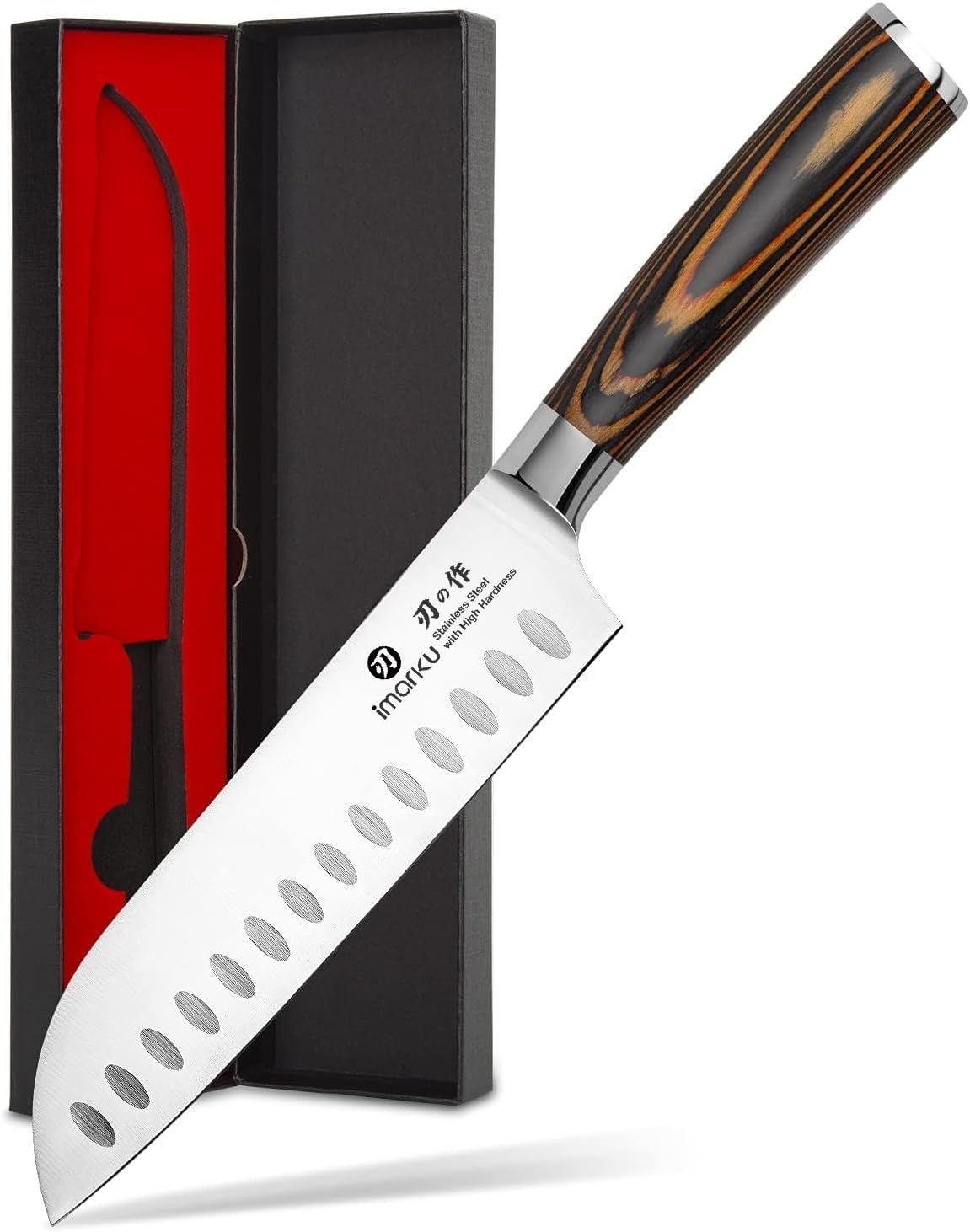
- The title identifies this offer as Orange.
- The blade has a hollow oval edge on both sides.
- The edge is hand-polished to 15–18 degrees per side.
Best For: Shoppers who specifically want an orange-handled 7-inch imarku hollow-edge santoku.
Hollow-Edge Everyday Prep
imarku Japanese Santoku Knife 7 Inch, 10Cr15CoMoV 3-Layer Stainless Steel
This 7-inch imarku Santoku combines a 10Cr15CoMoV high-carbon stainless steel core with protective stainless cladding. Its hollow-edge dimples and sandblasted blade face are designed to reduce drag when cutting moist or starchy ingredients such as potatoes, onions and zucchini.
A raised Pakkawood handle provides knuckle clearance, and the 12±2° per-side edge is honed for precise everyday cuts. It suits cooks looking for one knife for slicing, dicing and mincing.
The steel construction and edge angle are specific buying considerations; choose it if those details matter more than a sheath or a shorter blade.
Best For: Home cooks who want a 7-inch knife with dimples intended to help moist ingredients release.
| Pros | Cons |
|---|---|
|
|
Choose this model if food release and a raised handle are priorities for your daily vegetable and boneless-protein prep. Its clad 10Cr15CoMoV core and 12±2° per-side edge distinguish it from the other imarku options here.
The record does not establish care instructions or a storage guard, so check those details if dishwasher use or drawer storage will shape your choice. Its one-knife versatility is useful for routine slicing, dicing and mincing.
Lightweight Wave-Pattern Blade
KEEMAKE 7" Santoku Knife, Razor Sharp Chef Knife with Ergonomic Handle
KEEMAKE pairs a 7-inch forged blade with a 1.4116 high-carbon stainless steel construction and a 12–15° per-side edge. At 8.16 oz, it is presented as a lighter-handling option for cooks who find larger chef knives bulky.
The shaped Pakkawood handle supports a comfortable grip, while the wave-patterned blade is intended to reduce friction and sticking. Its profile supports push cuts and board contact, with a gently curved tip for limited rocking.
That combination gives it a versatile everyday role, though the wave pattern and stated edge geometry are the key distinctions to weigh against other santoku designs.
Best For: Cooks seeking a 7-inch santoku with a stated weight and a blade pattern intended to reduce food sticking.
| Pros | Cons |
|---|---|
|
|
This is a practical choice if you want a full-size santoku with a listed weight and a wave-patterned blade. The 1.4116 steel and 12–15° per-side edge offer more specific construction detail than some alternatives, while the gently curved tip adds limited rocking to its push-cutting profile.
Check care and storage details before buying, since neither dishwasher suitability nor a guard is specified. Its handle material and light stated weight may suit cooks who prioritize an agile feel.
Guarded Compact Santoku
Zyliss Comfort Knife - Japanese Stainless Steel Blade - Non-Slip Contoured Handle for All Hand Sizes - Kitchen Tools with Safety Kitchen Blade Guards - Dishwasher Safe - 5.9" Santoku Knife
The Zyliss Comfort Santoku has a 5.9-inch Japanese stainless steel blade, making it the shorter-blade choice among these selected knives. Its taper-ground blade is designed to retain its sharp edge longer, while a contoured, non-slip handle has finger indents and is described as fitting all hand sizes.
A protective blade guard makes it suitable for drawer storage or taking along for camping. The shorter blade and included guard are useful practical distinctions for compact kitchens or portable kits.
Buyers should compare its length and handle shape with their usual cutting board space and grip preference.
Best For: Cooks who prefer a shorter santoku and want a blade guard for drawer storage or camping.
| Pros | Cons |
|---|---|
|
|
Pick the Zyliss if a protective sheath and a shorter blade are useful for your kitchen or camping kit. The non-slip contoured handle and finger indents are its main grip features, while other selected models emphasize particular steel and edge designs.
Before choosing, consider whether 5.9 inches suits the volume and size of ingredients you usually prep. The knife's weight is not specified, so handling feel cannot be compared from that detail.
Powder-Steel Gift Option
imarku Japanese Santoku Knife 7 Inch, Ultra Sharp Chef Knife, Professional Grade Powder High Carbon Steel Forged Kitchen Knife, PakkaWood Ergonomic Handle, Gifts for Women and Men
This imarku Santoku is a 7-inch forged knife built around powder steel and an ergonomic PakkaWood handle with a diamond-profile contour. Its mirror-finished bolster is intended to balance the blade and handle, and the knife comes in a gift box.
The product notes give a hardness figure of HRC 62±1 and describe the magnetic attraction as relatively weak, details that may interest buyers comparing steel characteristics. It is positioned for meat and vegetable slicing as well as everyday kitchen use.
Consider its steel-focused construction and gift presentation alongside its less detailed care information before choosing it.
Best For: A gift buyer or experienced home cook interested in a forged powder-steel santoku with a PakkaWood handle.
| Pros | Cons |
|---|---|
|
|
Consider this model if powder steel, a diamond-contour handle and gift presentation are the features you value most. It differs from the imarku clad-steel model in the records: this one is described as forged powder steel, while the other uses a stainless-steel core with stainless cladding and hollow-edge dimples.
Check the care instructions and storage arrangement before buying because those details are not specified here. Its 7-inch blade places it among the full-size choices.
Hollow-Edge Classic Handle
imarku Chef Knife 7 Inch Kitchen Knife Ultra Sharp Santoku Knife - High Carbon Japanese Chefs Knife, Kitchen Gadgets 2025, Apartment Essentials, Birthday Gifts for Him Her, Best Gifts for Women Men
This 7-inch imarku Santoku uses high-carbon stainless steel and a hollow-edge design intended to reduce food sticking. The hand-polished edge is specified at 15–18 degrees per side, and the blade thickness is 2.5mm.
Its Pakkawood handle is shaped to provide a comfortable, secure grip, and the knife is intended for chopping, slicing, dicing and mincing across meat, vegetables, fruit and bread. A black gift box is included.
The main tradeoff to consider is its relatively broad edge-angle range versus the more acute edge figures on some other candidates; buyers should also check the care guidance for their preferred routine.
Best For: Everyday cooks who want a 7-inch hollow-edge knife with a high-carbon stainless steel blade and Pakkawood handle.
| Pros | Cons |
|---|---|
|
|
Choose this imarku if you want a familiar 7-inch size, a hollow-edge blade and a clearly stated 2.5mm thickness. The 15–18° per-side edge gives a different specification from the KEEMAKE and newer imarku clad-steel models, which have narrower stated angles.
Those figures describe edge geometry rather than a complete measure of cutting performance, so consider them alongside the handle and food-release design. Verify care and storage details if they matter to your setup.
Color-Accented Hollow Edge
imarku Santoku Knife, 7 inch Kitchen Knife Ultra Sharp Cooking Knife Japanese Chef Knife -High Carbon Stainless Steel - Ergonomic Pakkawood Handle, Gifts for Women/Men, Orange
This imarku Santoku has a 7-inch German high-carbon stainless steel blade and an ergonomic handle described in the notes as blue, although the product title identifies the offer as Orange. Its hollow oval edge is designed to help reduce food sticking during slicing, dicing and chopping.
The hand-polished edge is specified at 15–18 degrees per side, and the blade thickness is 2.5mm. It is intended for everyday meat and vegetable prep as well as home or professional kitchen use.
Because the handle color details conflict, check the exact offer images and selected variation before buying if color matters.
Best For: Shoppers who specifically want an orange-handled 7-inch imarku hollow-edge santoku.
| Pros | Cons |
|---|---|
|
|
This option has substantially similar documented blade dimensions and edge angle to another imarku candidate, so its distinct reason to choose it is the Orange color in the title. The notes instead call the handle blue, creating a real variation uncertainty.
If you do not specifically want this color offer, the other 7-inch imarku is the more straightforward choice to compare. Check the selected variation and images before buying, particularly if matching kitchen tools is important.
How to Choose Santoku Knives
How We Picked Best Santoku Knives
We selected knives whose supplied titles and details support a santoku use case, then looked for meaningful differences in blade size, steel construction, food-release design, handle shape and storage. That brings together 7-inch models with distinct edge or steel details, plus a shorter 5.9-inch knife with a protective sheath.
We left out a candidate whose title and notes identify a paring knife despite a conflicting catalog title, and an additional imarku model that closely overlaps the selected 7-inch options.
These differences suit different routines. A cook working with moist vegetables may value hollow dimples or a wave pattern, while someone short on drawer space or packing a camping kit may prefer a shorter blade with a guard.
Steel type, handle contour and edge angle are useful comparison points, but they should be considered alongside care requirements and the cook's preferred grip.
Comparing Santoku Knives for Everyday Prep
The most visible split is blade length: Zyliss provides a 5.9-inch blade, while the other selected knives are 7 inches. Within the full-size group, imarku offers a 10Cr15CoMoV clad-steel model with a raised handle and hollow dimples, a forged powder-steel model, and a high-carbon stainless version with a scalloped edge.
KEEMAKE pairs 1.4116 steel with a wave-patterned blade and a stated weight of 8.16 oz.
Storage and handling features can narrow the field further. Zyliss includes a protective sheath and has a non-slip contoured grip.
KEEMAKE specifies its weight and describes a shaped Pakkawood handle. The imarku choices emphasize different steel and blade-face designs; their care and guard details are not specified in these records.
Check whether your priority is a shorter blade, specific steel construction, food release or grip shape.
| Product | Standout features | Best for |
|---|---|---|
| imarku 7-Inch 10Cr15CoMoV SantokuCheck Price |
| Home cooks who want a 7-inch knife with dimples intended to help moist ingredients release. |
| KEEMAKE 7-Inch Santoku KnifeCheck Price |
| Cooks seeking a 7-inch santoku with a stated weight and a blade pattern intended to reduce food sticking. |
| Zyliss Comfort 5.9-Inch SantokuCheck Price |
| Cooks who prefer a shorter santoku and want a blade guard for drawer storage or camping. |
| imarku 7-Inch Powder Steel SantokuCheck Price |
| A gift buyer or experienced home cook interested in a forged powder-steel santoku with a PakkaWood handle. |
| imarku 7-Inch High-Carbon SantokuCheck Price |
| Everyday cooks who want a 7-inch hollow-edge knife with a high-carbon stainless steel blade and Pakkawood handle. |
| imarku 7-Inch Santoku, OrangeCheck Price |
| Shoppers who specifically want an orange-handled 7-inch imarku hollow-edge santoku. |
Choosing a Santoku Blade and Handle
For board work, match blade length to your available space and the ingredients you usually cut. A 7-inch blade gives a broad everyday prep profile, while Zyliss's shorter 5.9-inch option can suit compact setups.
Edge features also differ: hollow dimples, a scalloped hollow edge and KEEMAKE's wave pattern are each intended to reduce sticking, but the records do not establish that one design performs better than another.
Handle shape matters during repeated chopping and slicing. The raised imarku handle is designed for knuckle clearance, the Zyliss grip has finger indents and a non-slip contour, and the other imarku and KEEMAKE handles are shaped Pakkawood.
If grip comfort is a priority, consider those concrete shapes and whether your hand stays clear of the board. Care guidance is not consistent across these records, so confirm it if dishwasher use or hand washing is a deciding factor.
Who Should Buy Which Santoku Knife
Choose the Zyliss for a shorter blade and included sheath, especially if drawer storage or camping matters. Choose KEEMAKE if a stated 8.16 oz weight, a wave-patterned blade and a 1.4116 steel construction fit your preferences.
The 10Cr15CoMoV imarku suits buyers drawn to its clad core, hollow dimples and raised handle; the powder-steel imarku is the gift-ready option with a diamond-profile handle.
For a classic full-size profile with a specified 2.5mm thickness and hollow edge, consider the other imarku model. The Orange imarku is relevant mainly if that named color variation appeals, but its notes describe a blue handle, so verify the precise offer before ordering.
Compare handle feel, storage and care details along with the blade features to settle on the santoku that fits your kitchen routine.