The best chef knives balance blade length, handle feel, and cutting style for the prep you do most. These picks range from compact blades to full-size workhorses, with different steel constructions and storage features to weigh before buying.
Quick Top Products
Messermeister Meridian Elite 8” Chef’s Knife
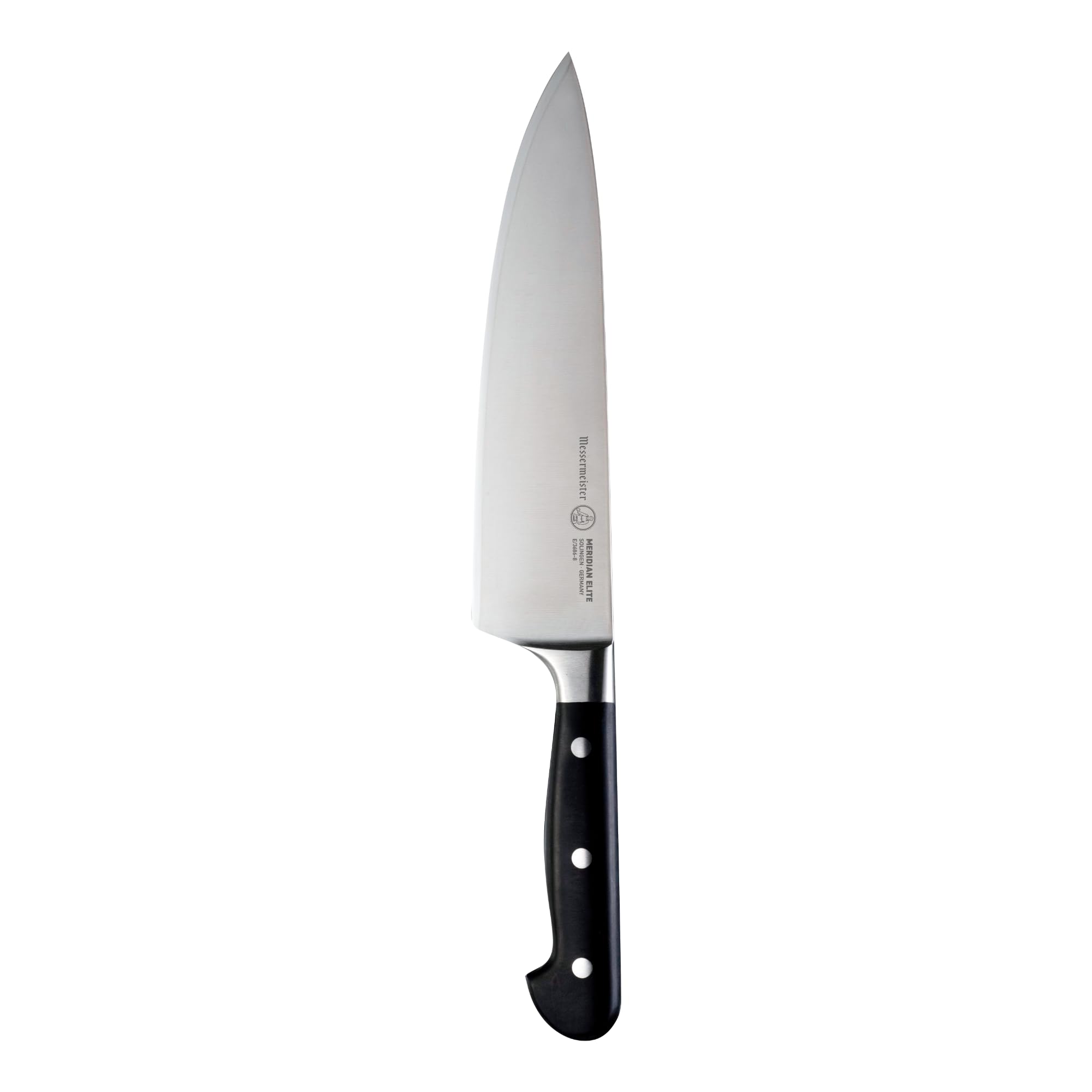
- Forged, one-piece construction with a triple-rivet POM handle.
- The 15-degree edge handles fruit, vegetables, meat, and fish.
- The heavy-weight design is balanced in the handle.
Best For: Cooks who want a full-size forged chef knife with a traditional, heavier feel.

imarku 8.5 Inch Pro Chef Knife
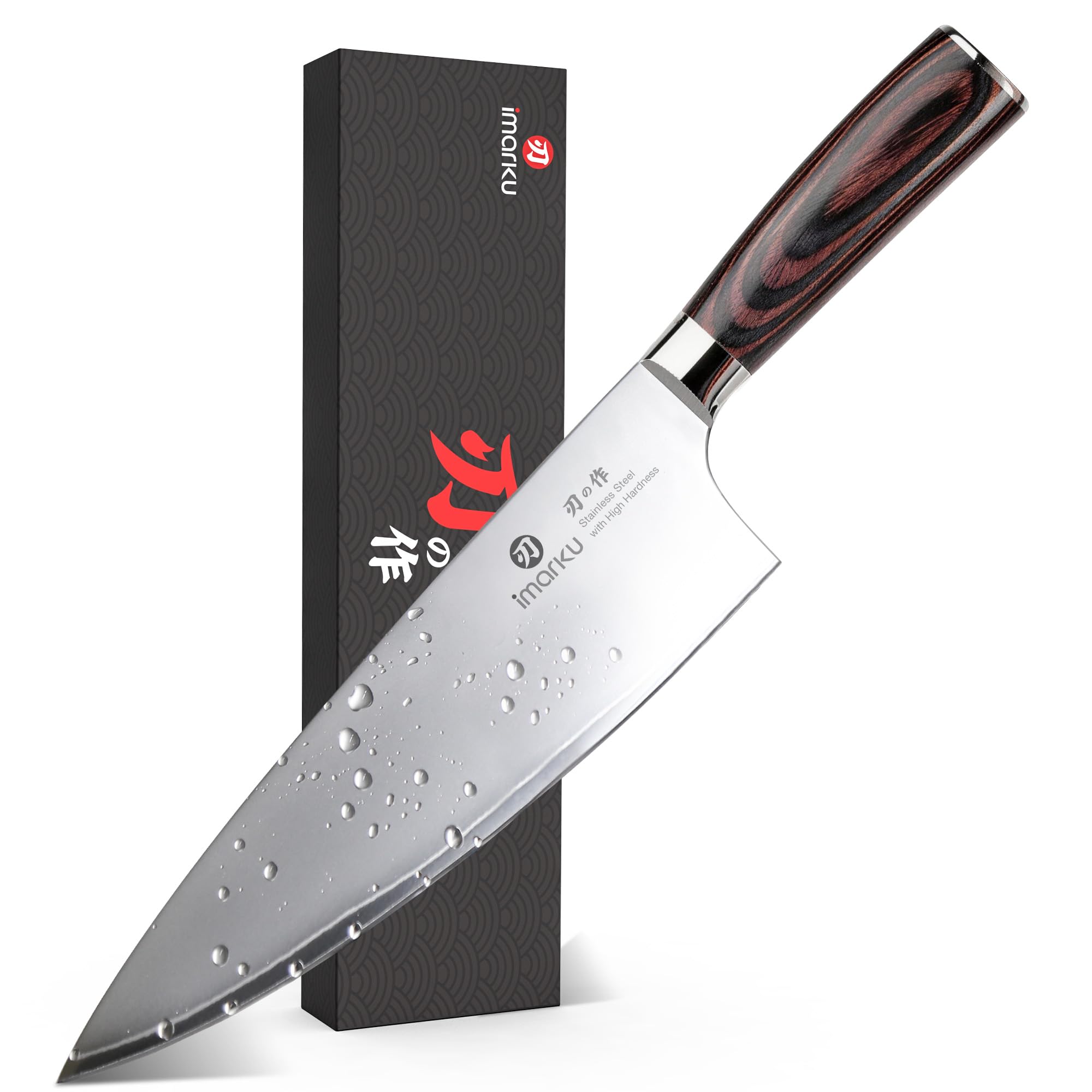
- The blade uses 10Cr15MoV steel and triple-layer composite construction.
- Its edge is hand-polished to 12 degrees.
- The full tang pairs with an ergonomic Pakkawood handle.
Best For: Home cooks who want an 8.5-inch blade and a Pakkawood handle.
imarku Japanese Chef Knife 8 Inch
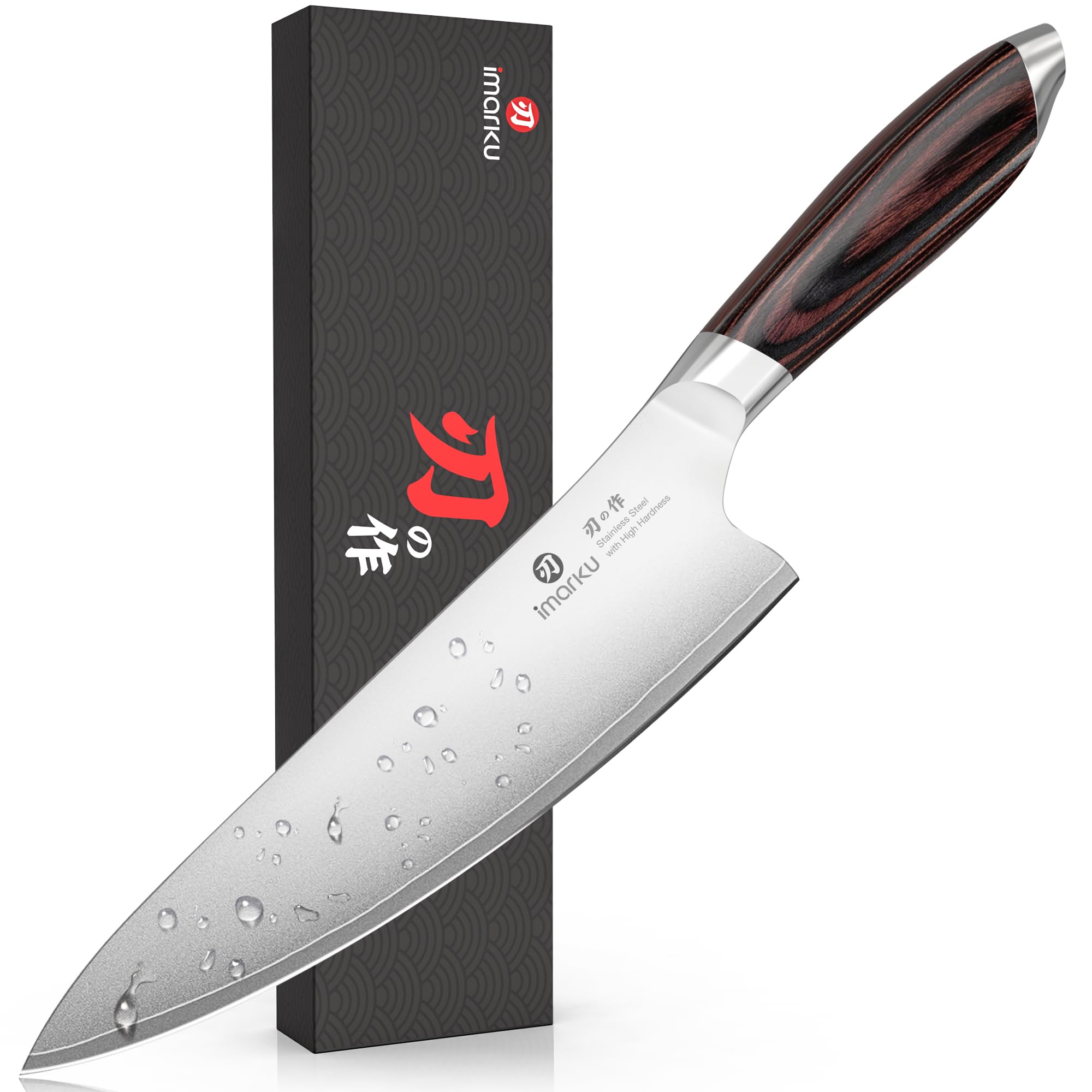
- The 8-inch blade has a double-bevel edge and triple-layer cladding.
- At 210 g, it is positioned as an option for smaller hands or lighter handling.
- It is not designed for bones, frozen foods, or hard squash rinds.
Best For: Cooks with smaller hands who want a lighter 8-inch chef knife.
imarku 8-Inch Pro Japanese Chef Knife
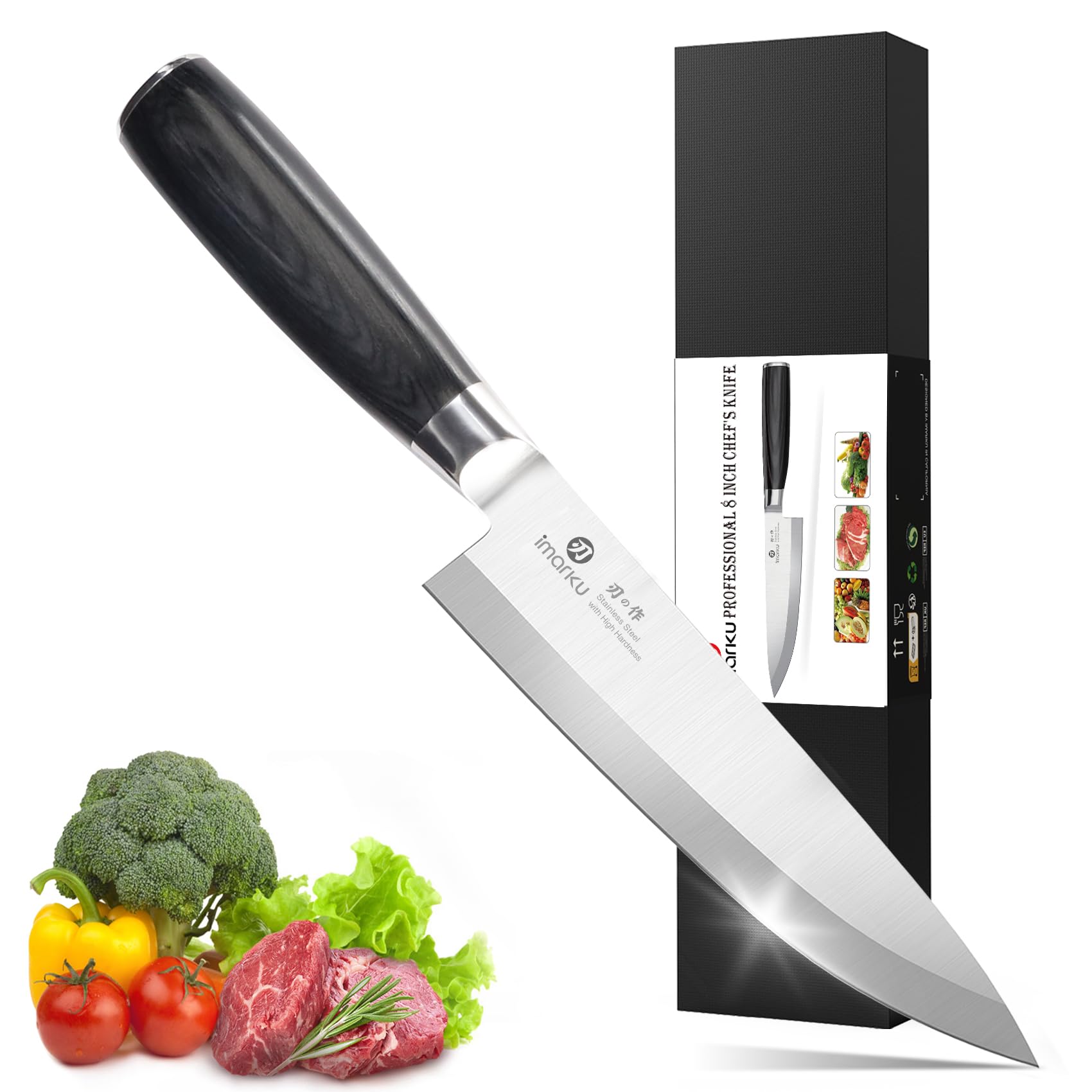
- It has a hand-sharpened single-bevel blade.
- The edge is tailored to right-handed users.
- Its Pakkawood handle has a rounded, non-slip shape.
Best For: Right-handed cooks interested in a single-bevel edge and precise slicing.
Sunnecko 8 Inch Damascus Chef Knife
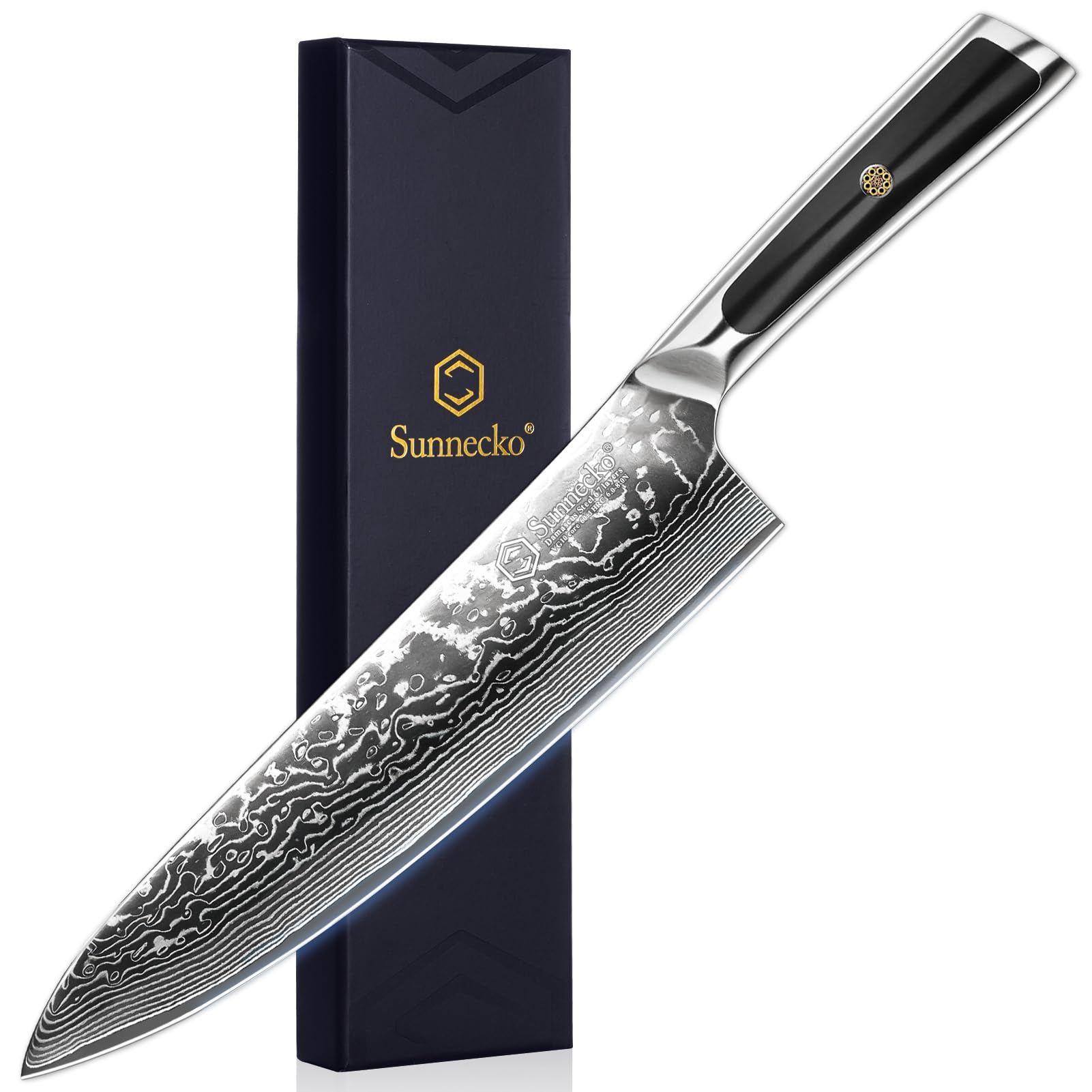
- The blade has a VG10 core and 67 layers of Damascus steel.
- Its edge is honed to 10–12 degrees per side.
- The full-tang design is paired with an ABS handle.
Best For: Cooks who want a full-size Damascus-style knife with a VG10 core.
8 Inch Damascus Chef Knife with VG10 Steel
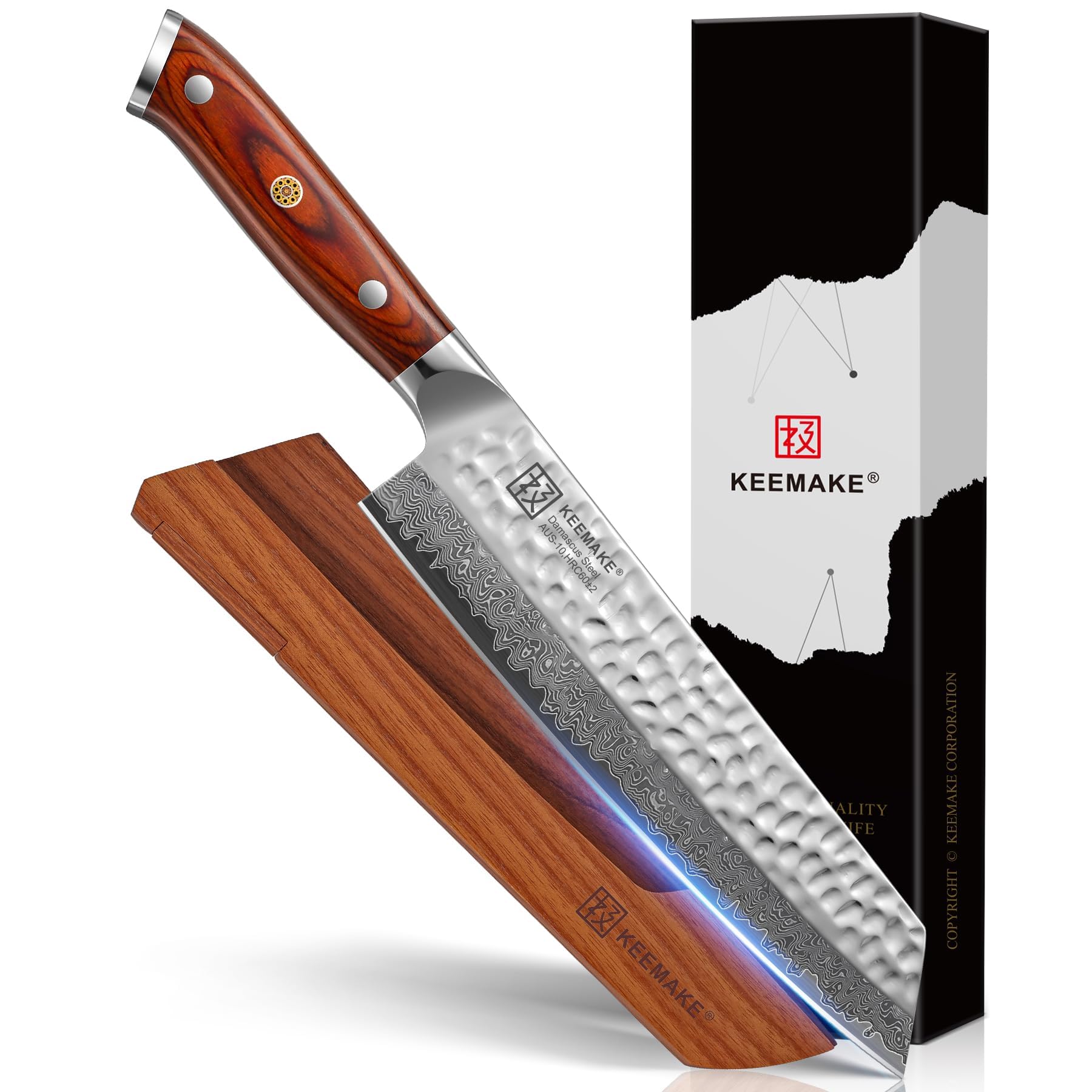
- The blade has a VG10 core and 67-layer hammered Damascus steel.
- It has an 8-inch blade with a 10-degree edge.
- A freestanding ash wood sheath is included.
Best For: Cooks seeking a Damascus-pattern 8-inch knife with a fitted countertop sheath.
SYOKAMI 7 Inch Cleaver Chef Knife
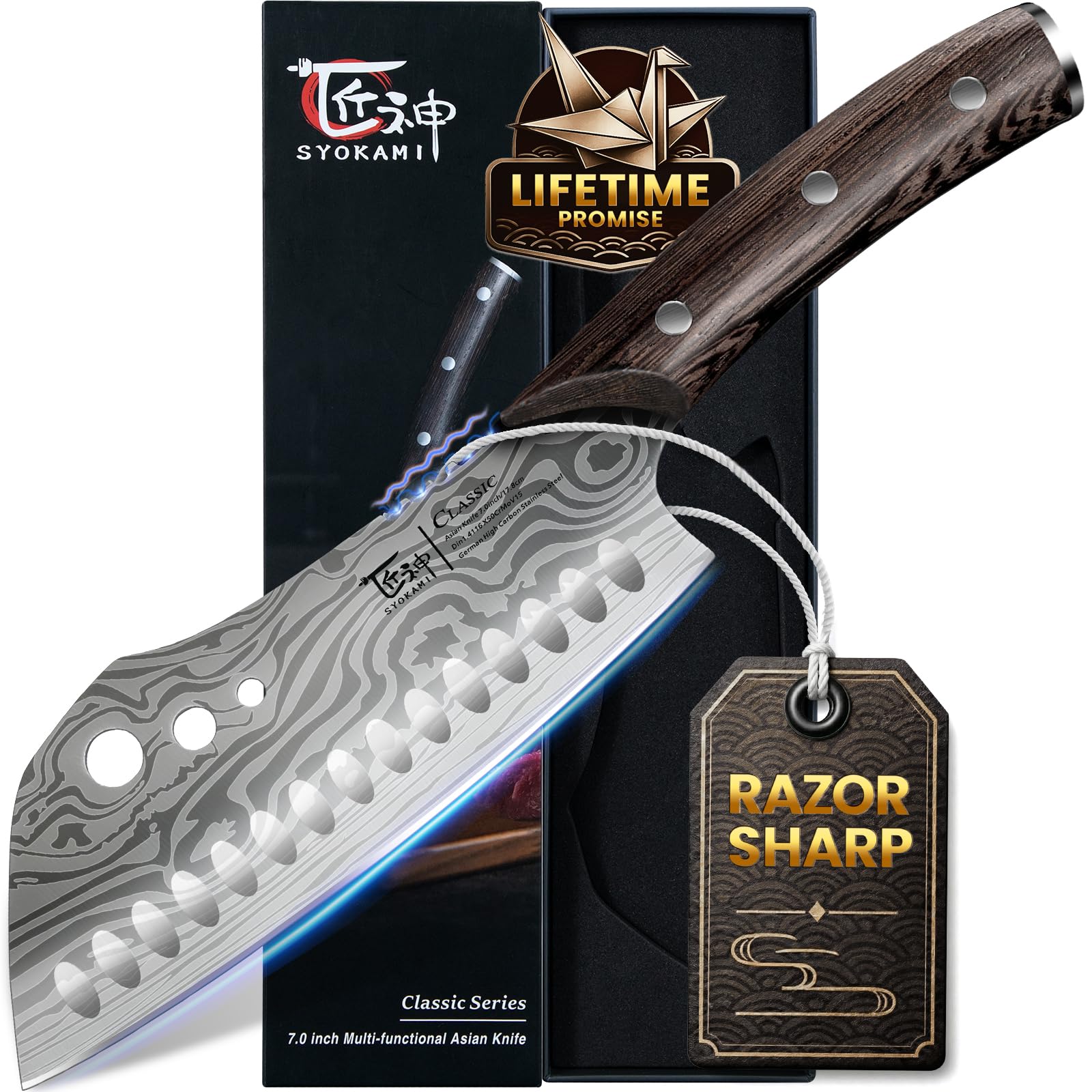
- The 7-inch knife combines Chinese chef, Santoku, and Nakiri features.
- Three holes strip leaves from herbs and plants.
- It has a full-tang German steel blade.
Best For: Cooks who want a compact Asian-style knife with a built-in herb stripper.
KEEMAKE 8 Inch Chef Knife
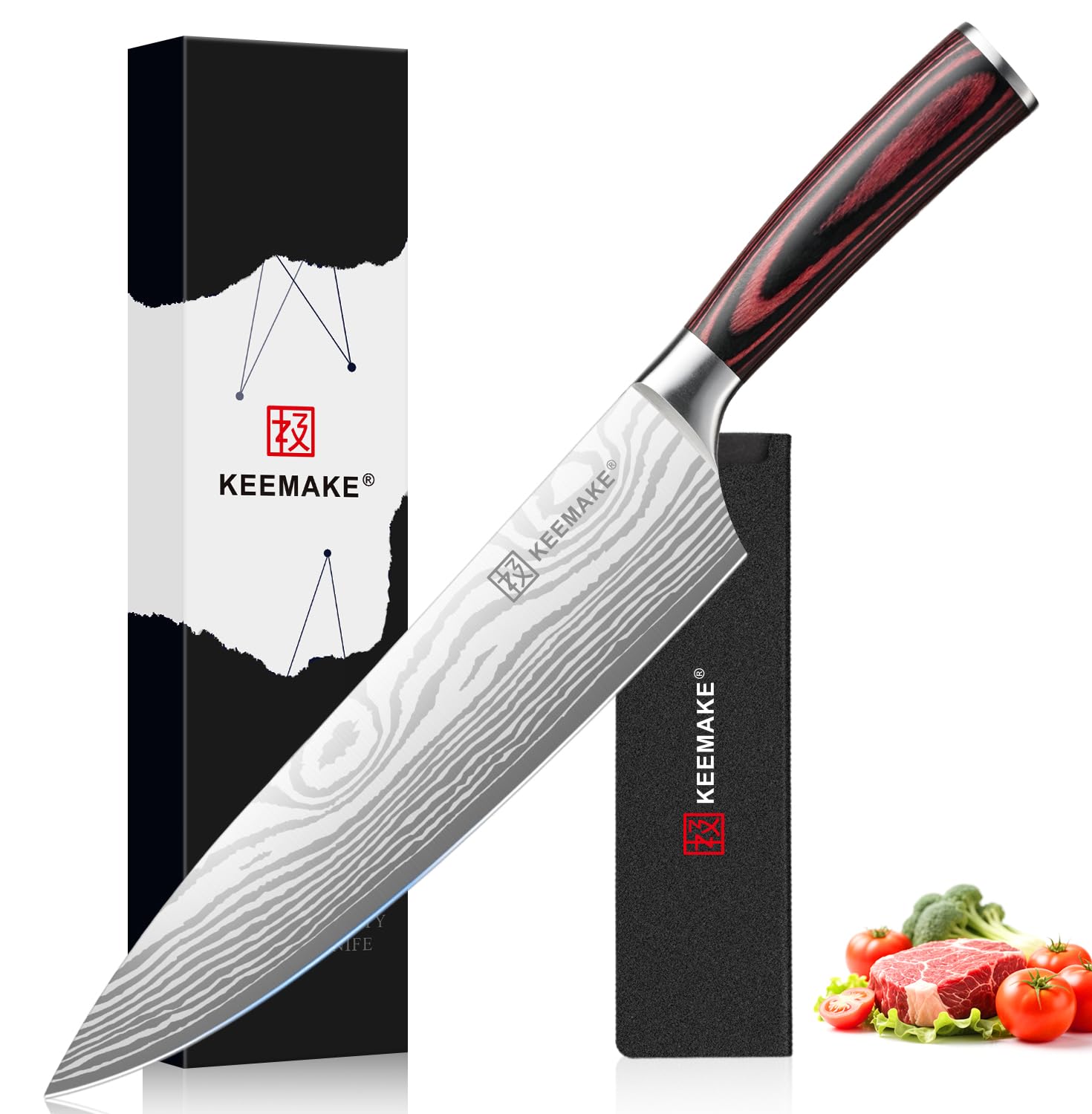
- The blade uses high-carbon stainless steel with a rust-resistant finish.
- Its edge is sharpened to 8–12 degrees on each side.
- A protective sheath is included with the gift box.
Best For: Cooks wanting an 8-inch forged knife with a protective sheath included.
Messermeister Oliva Elite Stealth 9” Chef’s Knife
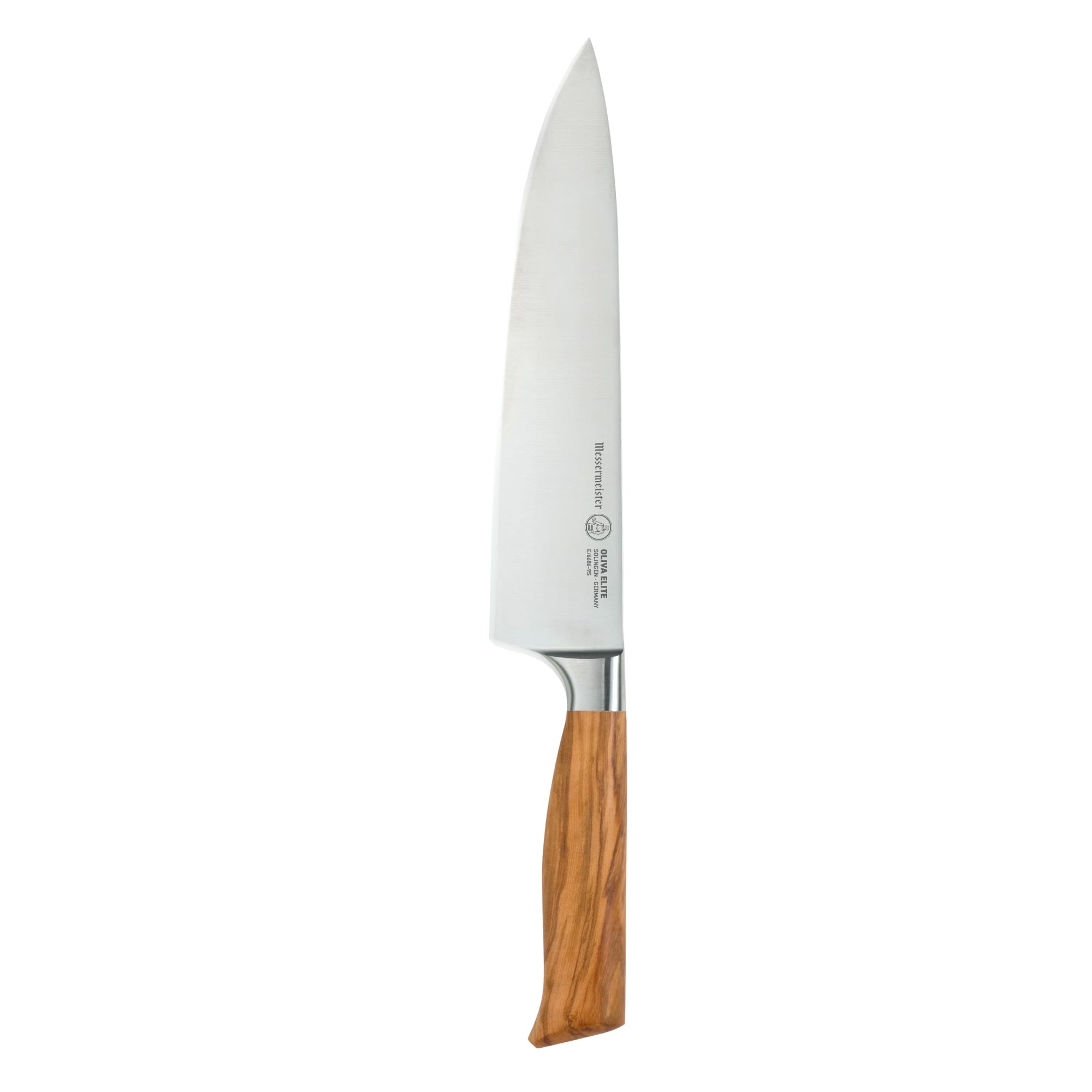
- It has a 9-inch blade and olive wood handle.
- The edge is 15 degrees and suits a wide range of foods.
- The Stealth version is thinner and lighter than the traditional knife.
Best For: Cooks who prefer a longer chef knife in a thinner, lighter construction.
Traditional German-Style Workhorse
Messermeister Meridian Elite 8” Traditional Chef’s Knife - Fine German Steel Alloy Blade - Rust Resistant & Easy to Maintain
The Meridian Elite pairs a German 1.4116 steel blade with a forged, one-piece construction and a triple-rivet POM handle. Its fine 15-degree edge is intended for slicing, chopping, and dicing produce, meat, and fish.
Messermeister also calls this version heavy weight, which may suit cooks who like the blade to carry more of the motion through firm ingredients. A bolsterless heel leaves the full edge accessible for cutting and sharpening.
This is a traditional-feeling option for broad prep, though its weight may feel less nimble to cooks who prefer a lighter knife.
Best For: Cooks who want a full-size forged chef knife with a traditional, heavier feel.
| Pros | Cons |
|---|---|
|
|
Choose this version if a heavier, traditional chef knife fits your grip and cutting rhythm. Its 8-inch size and broad food uses suit general prep, while the bolsterless heel simplifies honing and sharpening along the blade.
The tradeoff is that the weight may feel less agile for fine, quick work. Check that the handle shape and heft feel comfortable before committing.
Longer Composite-Steel Blade
imarku 8.5 Inch Pro Japanese Chef Knife, Ultra Sharp Kitchen Knife 10Cr15Mov Stainless Steel, Triple-Layer Composite Blade, Ergonomic Pakkawood Handle, Professional Cutting Knife,Birthday Gift
This imarku chef knife has an 8.5-inch blade made with 10Cr15MoV high-carbon stainless steel and a triple-layer composite construction. The edge is hand-polished to 12 degrees, while the full tang and ergonomic Pakkawood handle are intended to balance control and comfort through longer prep sessions.
Its stated uses include slicing, dicing, and mincing meat, vegetables, and fruit. The extra reach compared with a standard-length option may help with broad cuts, but it can be less convenient for cooks with smaller boards or who favor compact handling.
Hand washing and thorough drying are recommended.
Best For: Home cooks who want an 8.5-inch blade and a Pakkawood handle.
| Pros | Cons |
|---|---|
|
|
Consider this knife if you want a longer-than-standard blade and value its composite construction and Pakkawood handle. It is aimed at everyday slicing, dicing, and mincing, with full-tang balance for extended prep.
The longer blade may require more board space and feel less nimble for smaller hands or tight work areas. Confirm that 8.5 inches suits your cutting board, grip, and storage setup, and plan to hand wash and dry it.
Lightweight Daily Prep
imarku Japanese Chef Knife 8 Inch, Sharp Kitchen Knife in Japanese HC Steel
This imarku has an 8-inch blade with a 10Cr15CoMoV high-carbon stainless steel core, triple-layer cladding, and a double-bevel edge. Its pakkawood handle and 210 g weight are highlighted for cooks who find traditional chef knives heavy or have smaller hands.
The curved blade is intended for slicing, dicing, mincing, and chopping vegetables, herbs, fish, and boneless meats. A matte finish is designed to help ingredients release from the blade.
It is not intended for bones, frozen foods, or hard squash rinds, so cooks who regularly tackle those jobs should choose a different tool for them.
Best For: Cooks with smaller hands who want a lighter 8-inch chef knife.
| Pros | Cons |
|---|---|
|
|
This model fits cooks who want a lighter 8-inch knife and appreciate a double-bevel edge for mixed daily prep. Its matte finish and curved blade suit vegetables, herbs, fish, and boneless meat.
The important limit is its explicit exclusion of bones, frozen ingredients, and hard squash rinds. Keep a separate tool for those tasks, and check that the lightweight handle feels secure for your grip.
Right-Handed Single-Bevel Edge
imarku Chef Knife 8-Inch Pro Japanese Kitchen Knife High-Carbon Stainless Steel Paring Knife Ergonomic Handle Rasor Sharp Single-Bevel Edge Gift for Men
This imarku uses a hand-sharpened single-bevel blade with a 13-degree angle and a Pakkawood handle. The knife is tailored to right-handed users, a key fit detail because its edge geometry is not presented as ambidextrous.
The notes describe it as multipurpose, including chopping, slicing, dicing, and precise cuts on small to medium fish. Its high-carbon stainless steel is rated at 56–58 HRC, and the handle is shaped for a secure grip.
Avoid dishwashers and soaking; hand care is recommended. This is a more specialized choice than a conventional double-bevel chef knife.
Best For: Right-handed cooks interested in a single-bevel edge and precise slicing.
| Pros | Cons |
|---|---|
|
|
Choose this knife only if a single-bevel edge fits your technique and you are right-handed. Its 13-degree sharpening and fish-prep details make it more specialized than a typical double-bevel chef knife, while the Pakkawood handle provides a familiar grip shape.
The main tradeoff is handedness: left-handed cooks should consider an option without this stated restriction. Check that the blade geometry matches your preferred cutting style.
Damascus Pattern and VG10 Core
Sunnecko 8 Inch Japanese Damascus Chef Knife - Ultra Sharp VG10 Steel | 10-12 Degree Edge 67 Layers Kitchen Cooking Knives for Meat, Vegetable & Fruit, Full Tang, Camping & BBQ Gifts for Men
This Sunnecko has an 8-inch blade with a VG10 vacuum-treated core and 67 layers of high-carbon stainless steel. It is hand-honed to a 10–12-degree edge per side and paired with a full tang and ABS handle.
Those details distinguish it from simpler chef knives, while the listed uses remain familiar: slicing, dicing, and chopping meat, vegetables, and fruit. The notes also mention sushi and sashimi prep and outdoor BBQ use.
Its decorative layered pattern and gift box may appeal to cooks who want appearance alongside general utility. Hand-wash care details are not specified here.
Best For: Cooks who want a full-size Damascus-style knife with a VG10 core.
| Pros | Cons |
|---|---|
|
|
Consider the Sunnecko if the 8-inch format, VG10 core, and Damascus pattern appeal to you. It covers standard chopping and slicing as well as more delicate sushi or sashimi prep, and its notes also mention outdoor BBQ use.
The main tradeoff is less clarity around care: washing and drying instructions are not specified. Check the maker’s care guidance and whether an ABS handle fits your preference before buying.
Wooden Blade Sheath Included
8 Inch Damascus Chef Knife, Japanese Kitchen Knife with VG10 Steel
This 8-inch kiritsuke-style chef knife combines a VG10 core with 67-layer hammered Damascus steel and a 10-degree edge. It has a full-tang construction, triple-rivet Pakkawood handle, and a fitted ash wood sheath that stands upright on a counter.
The notes describe it for vegetables, fruit, meat, and fish, with the kiritsuke profile combining chef-knife versatility and slicing precision. The sheath adds a storage feature that many knives in this group lack.
Its fit and use differ from a conventional chef knife, so check that the profile suits your preferred cutting motions and that the sheath fits your storage space.
Best For: Cooks seeking a Damascus-pattern 8-inch knife with a fitted countertop sheath.
| Pros | Cons |
|---|---|
|
|
Choose this model if you want a kiritsuke-style profile and a fitted sheath that can stand upright for storage. The steel construction and listed food range make it suitable for varied kitchen prep, while the sheath helps protect the edge when put away.
The tradeoff is that the product’s more angular profile may not suit every cook’s preferred rocking or chopping style. Check handling preference and care guidance before buying.
Herb-Stripper Utility
SYOKAMI Cleaver Chef Knife with Herb Stripper, 7" Asian Kitchen Knife 3-in-1 Combined with Chef's Knife, Santoku, Nakiri for Slicing, Chopping, Dicing, Mincing, Housewarming Birthday Cooking Gifts
The SYOKAMI is a 7-inch Asian-style chef knife that blends features associated with Chinese chef, Santoku, and Nakiri knives. Its three-hole herb stripper is designed to remove leaves from stems such as basil, thyme, and rosemary, adding a prep function beyond ordinary slicing and chopping.
The full-tang German steel blade has a hand-polished edge at 14–16 degrees per side and 56+ Rockwell hardness. A wenge wood handle with gear-tooth detailing is intended to improve grip when wet.
This is a compact, feature-rich alternative to a standard Western chef knife; consider whether its cleaver-like profile matches your usual cutting motion.
Best For: Cooks who want a compact Asian-style knife with a built-in herb stripper.
| Pros | Cons |
|---|---|
|
|
This is a good fit if you regularly prep leafy herbs and want a shorter Asian-style knife that combines several familiar profiles. The herb stripper is its most distinctive feature, while the full tang and textured wenge handle support general chopping and slicing.
The tradeoff is that the 7-inch blade and cleaver-oriented shape will feel different from a longer Western chef knife. Check the profile and weight in person if those details matter to your cutting style.
Sheath for Storage and Travel
KEEMAKE 8" Chef Knife, Ultra Sharp Kitchen Knife with Ergonomic Handle
The KEEMAKE 8-inch chef knife uses forged 1.4116 high-carbon stainless steel with a 58±2 HRC hardness rating. Its Pakkawood handle and curved design are intended to support a pinch grip, while the edge is hand-sharpened to 8–12 degrees on each side.
The stated food range is unusually broad, extending from produce and fish to cheese and cooked brisket. A protective sheath is included with a gift box, making storage a visible part of the package.
The care notes do not specify washing instructions, so check those before use. Its narrow edge-angle figure is a product specification, not an independent measure of cutting performance.
Best For: Cooks wanting an 8-inch forged knife with a protective sheath included.
| Pros | Cons |
|---|---|
|
|
Pick this option if you want a full-size forged chef knife with an included sheath and a broad stated range of kitchen tasks. Its Pakkawood handle is shaped for a pinch grip, and the edge angle is listed in a relatively narrow range.
The tradeoff is that care instructions are not provided in the supplied details. Confirm hand-washing guidance and whether the handle shape feels comfortable for your grip.
Thin, Light Nine-Inch Blade
Messermeister Oliva Elite Stealth 9” Chef’s Knife - Fine German Steel Alloy Blade & Natural Mediterranean Olive Wood Handle - Rust Resistant
The 9-inch Oliva Elite Stealth has a German 1.4116 steel blade and a natural Mediterranean olive wood handle. Its smooth 15-degree edge is meant for cutting, chopping, slicing, and dicing both firm and soft foods, including meat and fish.
The Stealth design is described as thinner and lighter than the maker’s traditional chef knife, giving this longer blade a more agile profile than its size might suggest. A bolsterless heel supports use of the full edge during sharpening.
The extra length can help with broad cuts, but it may feel cumbersome on a small board or in a compact kitchen.
Best For: Cooks who prefer a longer chef knife in a thinner, lighter construction.
| Pros | Cons |
|---|---|
|
|
This longer Stealth model suits cooks who want more blade length while keeping a thinner, lighter profile than the traditional series. It covers broad everyday prep and has a bolsterless heel for using the edge from end to end.
Its tradeoff is the 9-inch blade length, which needs room for comfortable cutting and storage. Check your board size and grip preference before choosing it.
How to Choose Chef Knives
How We Picked Chef Knives
We prioritized candidates clearly presented as chef knives and selected a mix of full-size all-purpose blades, a lighter design, a compact Asian-style profile, a right-handed single-bevel option, and knives with distinctive storage or steel construction. Duplicate handles, overlapping size variations, accessories, and specialty butcher or deba profiles did not earn separate spots.
The aim is to make the differences useful for real kitchen prep rather than treat every knife as interchangeable.
The selection also weighs the details buyers can compare from these candidates: blade length, bevel style, edge angle, handle material, construction, intended foods, and included sheath. Those features shape reach, grip, maintenance, and where the knife fits in a kitchen.
An edge-angle number alone does not establish how a knife will perform for every user, so match it to the rest of the design and your cutting habits.
Comparing Chef Knives for Everyday Prep
For a familiar full-size profile, compare the 8-inch Messermeister Meridian Elite with the Oliva Elite Stealth. The Meridian has a heavier traditional feel and POM handle; the Oliva is thinner and lighter with olive wood.
The imarku 8-inch knife is notably light at 210 g and calls out smaller hands, while its stated limits exclude bones, frozen food, and hard squash rinds. The KEEMAKE and imarku 8.5-inch options add sheaths or composite construction, but the longer blade needs more board space.
Steel and edge design separate the more specialized picks. The Sunnecko and unbranded Damascus model use layered construction with VG10 cores, while the imarku single-bevel knife is tailored to right-handed cooks.
SYOKAMI’s 7-inch profile combines Asian knife styles and adds an herb stripper. Consider how much of your prep involves herbs, fish, broad slicing, or standard rocking cuts before choosing a profile based on appearance alone.
| Product | Standout features | Best for |
|---|---|---|
| Messermeister Meridian Elite 8” Chef’s KnifeCheck Price |
| Cooks who want a full-size forged chef knife with a traditional, heavier feel. |
| imarku 8.5 Inch Pro Chef KnifeCheck Price |
| Home cooks who want an 8.5-inch blade and a Pakkawood handle. |
| imarku Japanese Chef Knife 8 InchCheck Price |
| Cooks with smaller hands who want a lighter 8-inch chef knife. |
| imarku 8-Inch Pro Japanese Chef KnifeCheck Price |
| Right-handed cooks interested in a single-bevel edge and precise slicing. |
| Sunnecko 8 Inch Damascus Chef KnifeCheck Price |
| Cooks who want a full-size Damascus-style knife with a VG10 core. |
| 8 Inch Damascus Chef Knife with VG10 SteelCheck Price |
| Cooks seeking a Damascus-pattern 8-inch knife with a fitted countertop sheath. |
| SYOKAMI 7 Inch Cleaver Chef KnifeCheck Price |
| Cooks who want a compact Asian-style knife with a built-in herb stripper. |
| KEEMAKE 8 Inch Chef KnifeCheck Price |
| Cooks wanting an 8-inch forged knife with a protective sheath included. |
| Messermeister Oliva Elite Stealth 9” Chef’s KnifeCheck Price |
| Cooks who prefer a longer chef knife in a thinner, lighter construction. |
Choosing a Chef Knife Length and Handle
An 8-inch blade is a common middle ground among these picks, but the best length depends on your board, hand size, and storage. The 8.5-inch imarku and 9-inch Messermeister offer more reach; the 7-inch SYOKAMI and 6.3-inch Matsato are shorter, though the Matsato is not included among the selected products.
Longer blades can feel unwieldy in tight work areas, while shorter ones cover less of a broad cut in one pass. Handle material also changes the feel: compare POM, Pakkawood, olive wood, ABS, and wenge rather than assuming a single material is right for everyone.
Weight, balance, and edge geometry deserve a close look. A lighter knife may feel easier to guide during repetitive prep, while cooks who like a heavier blade may favor the traditional Meridian.
Single-bevel knives have a more specific handedness fit; confirm this before buying. If you switch between rock-chopping and push-cutting, check how the blade profile and curved edge match your technique.
Care and Storage for Kitchen Chef Knives
Several candidates call for hand washing or advise against dishwashers and soaking. Follow the care instructions for the specific knife, dry it promptly where directed, and use a sheath or suitable knife storage to keep its edge from contacting other tools.
The ash wood sheath with the 8-inch Damascus kiritsuke stands upright, while the KEEMAKE and Sunnecko options include protective covers. A sheath protects the blade during storage but does not replace a stable place to put a knife away.
If you are buying a knife with a wood handle, check its care guidance and whether the handle shape fits your grip. Some details, including care for the Sunnecko Damascus and the ash-sheath model, are not specified in the supplied product facts.
Confirm these points before buying, especially if you expect to use a dishwasher or need a particular storage setup.
Who Should Buy Which Chef Knife
Choose the Messermeister Meridian Elite for a traditional heavier 8-inch knife, or the Oliva Elite Stealth if you prefer a thinner, lighter feel and olive wood. The 210 g imarku is aimed at smaller hands and everyday ingredients, with explicit limits on hard or frozen foods.
For a distinctive blade construction, compare the two VG10 Damascus options and decide whether an upright ash sheath matters.
The SYOKAMI suits cooks who will use its herb stripper and prefer an Asian-style profile. Right-handed cooks who want a single-bevel edge can consider the imarku 8-inch Pro, while cooks wanting an 8.5-inch blade and composite construction may prefer that imarku model.
Before buying, match blade length, profile, hand orientation, and care needs to your counter space and daily prep.